How the Hamilton County Court Calendar Works
Hamilton County publishes a family of calendars. Criminal Court has following-week and weekly master dockets. Circuit Court posts weekly daily dockets, motion dockets, and division information. Chancery uses part-specific motion schedules and procedural lists. Sessions Civil follows a yearly weekday plan. The county Courts page routes to all five county court groups.
Municipal cases remain on city calendars unless the case moves into a county court. Federal cases use the Eastern District of Tennessee and bankruptcy calendars. Always match the issuing or filing court before reading a date.
Hamilton Docket Update Rhythm
Update timing differs by product. Criminal Court's following-week docket is updated Thursday, and its weekly master docket is updated Monday. Circuit weekly and motion materials are updated Friday. Chancery motion pages follow each part's practice. Sessions Civil uses the published 2026 schedule to organize recurring categories, though the case entry still controls the individual matter.
A posted list may change after its regular update. The official pages warn that online docket material is informational. For a hearing near in time, compare the newest list with the case docket and call the clerk. Saved files and screenshots can become stale.
Hamilton County Court Date Lookups
Gather the court, division or part, case number, party name, and likely date range. Those details keep a Circuit motion from being confused with a Sessions trial or city citation. If the court is unclear, read the caption on the latest notice.
- Select the correct court from the county Courts page.
- Open its current daily, weekly, motion, or civil schedule.
- Match the case number and party with the division or part.
- Record the date, time, location, judge, and setting type.
- Recheck the source and call the clerk close to court.
TN Case Finder can locate Circuit and Sessions Civil matters. CJUS provides criminal search and today's Daily Court Docket. Tennessee AOC Public Case History is only the appellate layer. Clerk telephones, counters, posted lists, and an attorney are the fallback channels.
Hamilton Sessions Civil Week
The Sessions Civil 2026 schedule divides motions, defaults, initial appearances, ordinary civil trials, and detainer trials into weekday blocks. It also separates Chattanooga Housing Authority detainers from other matters. A reader must capture both the day and category.
This calendar explains when a class of matters is normally heard. It does not guarantee a specific case remains set. Use Sessions Civil eDockets or call 423-209-7630 to verify the current entry.
Court Settings: What Each Field Means
A setting is a scheduled procedural event. Trial, status, settlement, compliance, motion, default, initial appearance, and detainer each describe why the case is listed. None of those labels alone states what the judge decided.
| Date | The scheduled day, subject to a later reset or order. |
|---|---|
| Time | A docket-call or individual time; confirm which applies. |
| Courtroom | The room tied to the court and division assignment. |
| Judge | The judicial assignment needed to pick the correct list. |
| Setting Type | The event, not a disposition or proof it occurred. |
Hamilton Chancery Motion Calls
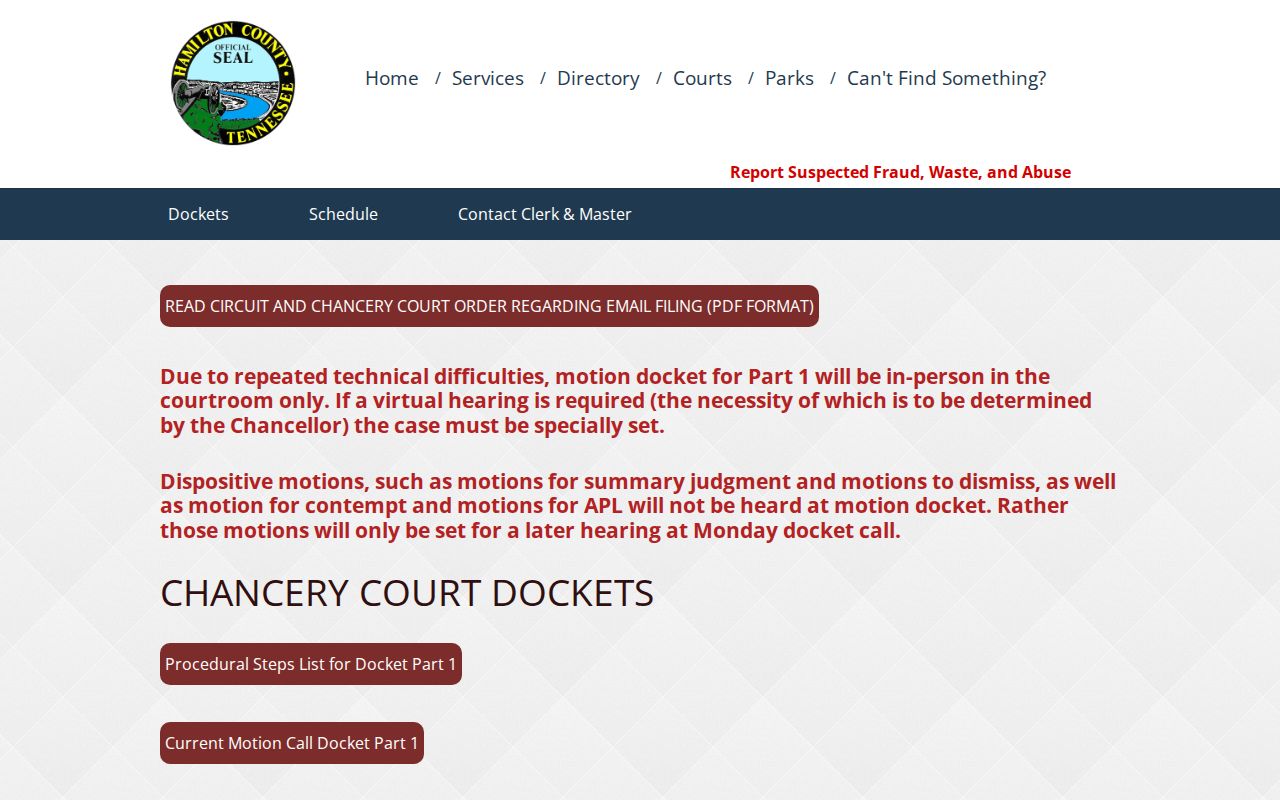
Hamilton County Chancery dockets separate Part 1 and Part 2 motion practice. Some motions are reserved for Monday docket call. Part 1 is generally in person, while Part 2 has recurring hybrid settings. Current notices should be checked because a saved WebEx path may not apply.
Capture the part, motion date, and appearance method. Chancery cases are not placed on the Circuit schedule merely because both are civil.
The official Chancery source displays the part-specific schedule paths.
When a Court Date Moves
A continuance postpones a setting. A reset places it on a later date, while cancellation removes the listed event. The controlling change may appear in a later docket entry or signed order before every public PDF is refreshed.
Criminal Court uses 423-209-7500, Sessions Criminal 423-209-7600, Circuit 423-209-6700, Sessions Civil 423-209-7630, and Chancery 423-209-6600. Call the office that keeps the case. The Hamilton County docket search can help locate the record first.
Hamilton's 270-Day Calendar
Circuit Court's Procedural Steps List identifies civil cases with no action for 270 days. The court gives a 30-day posting period and uses the third Monday of February, June, or October for dismissal scheduling. This is a status mechanism, not a decision on the dispute.
A filing during the notice period or later order may change the posture. Compare the list with the current case record and contact the Circuit Clerk if entries differ.
Hamilton Remote Hearing Checks
Remote access is court-specific. Circuit Divisions 2 and 4 have in-person notices. Chancery Part 1 is generally in person, and Part 2 has recurring hybrid settings. Check the current page, case order, and clerk notice.
On-site visitors should expect security screening under Sessions local rules. Arrive with the case number and enough time to locate the assigned room.
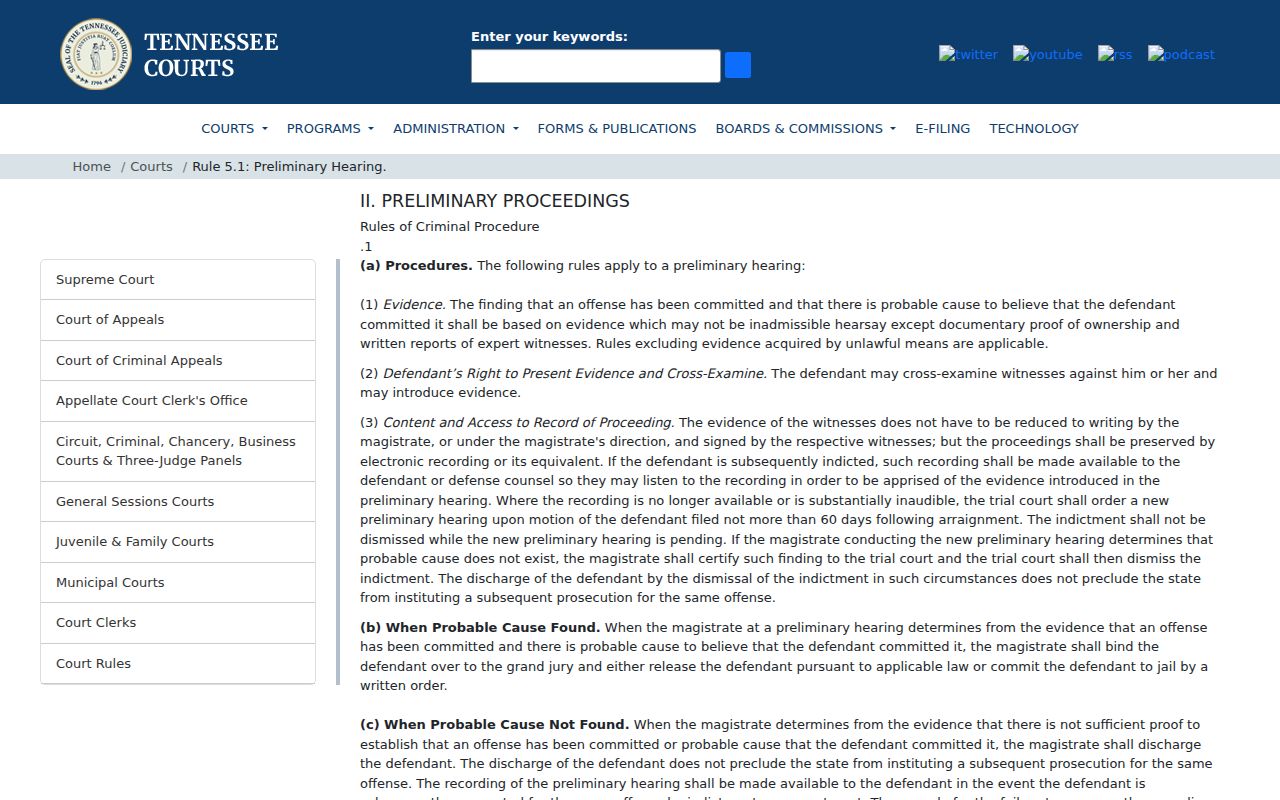
The official preliminary-hearing rule explains recording and transfer of that event.
Hamilton Calendar Location Check
The physical court location follows the court family. Criminal and Sessions offices are centered at 600 Market Street, while Circuit and Chancery offices are at 625 Georgia Avenue. Juvenile Court is at 1600 East Third Street. A federal Chattanooga case goes to the separate federal courthouse system. The same city can therefore contain several unrelated hearing calendars.
Read the building and room from the current notice. Circuit has four divisions, Criminal has three, and Sessions has five judicial divisions. A date without its division can send a visitor to the wrong docket call. Neither a party name nor a city name is enough to establish the correct venue.
Hamilton Settings Need Context
A trial docket lists cases scheduled for trial or a related event, but it does not prove a trial occurred. A motion docket shows requests set for court action, not the ruling. Settlement and compliance labels also describe posture, not a final result. These distinctions matter when following one's own case or a public proceeding.
Look for the later docket entry and filed order. If the calendar and the clerk's record differ, the original record controls. Ask whether a document is available as a plain or certified copy if formal proof is needed.
Hamilton Calendar Verification Notes
Write down the source URL, the date the page was checked, the date printed on the docket, and the full court assignment. Then record the case or citation number without copying private identity fields. This small audit trail makes it clear whether a note came from a live daily table, a regenerated weekly PDF, a recurring schedule, or an old city list.
For a last-minute change, ask the clerk whether the online entry reflects the original docket. A calendar date is useful public court information, but the filed order and clerk-maintained record remain the better proof of what the court directed.
Missed Settings and What Comes Next
Check the newest docket entry at once, call the clerk, and contact counsel if represented. Do not assume the court reset the matter. The response depends on the court and setting type. A civil matter may face default or dismissal, while a criminal or municipal case may carry a different order.
Act promptly. Give the clerk the court, case number, party name, and missed date. Ask what the judge entered and what formal step is required next.
Obtain the signed order or certified record when the consequence matters. A prior calendar printout does not prove current status.
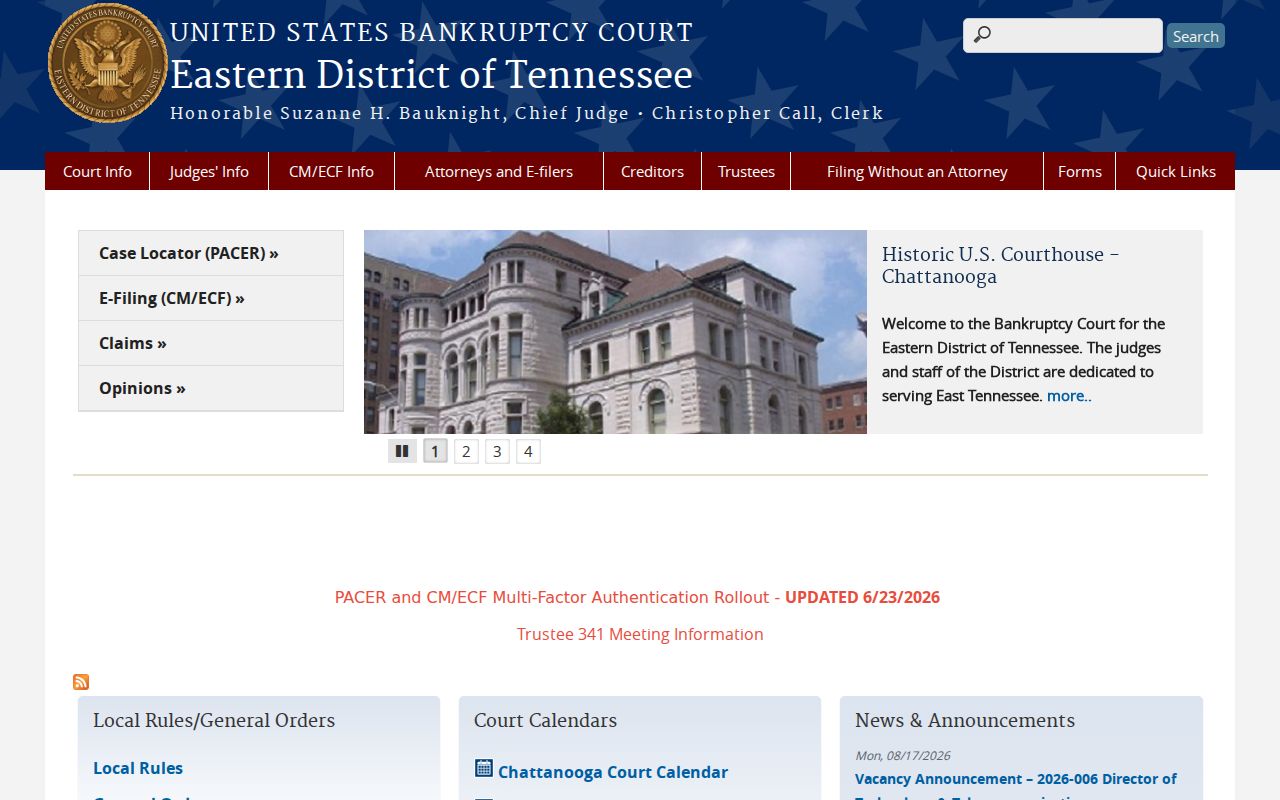
The Eastern Tennessee Bankruptcy Court maintains a separate federal calendar.