
Hamilton County Civil Docket Searches
Begin with the court, not just a name. General Sessions Civil, the limited-jurisdiction court with no jury, is served by Sessions Civil eDockets. For division-based weekly and motion lists, turn to Circuit Court dockets. Chancery posts its own motion and procedural lists. Hamilton County links TN Case Finder. That tool is the public inquiry route for Circuit and Sessions Civil records.
Before searching, gather the party or organization name, the likely filing year, the court, and the case number if you have it. Confirmed search labels include Party Name, File Date, and Attorney Name. A broad name search can pull in unrelated court records. So match the division, date, and record key carefully.
- Identify Sessions Civil, Circuit, or Chancery from the claim and prior papers.
- Open that court's official docket page or TN Case Finder.
- Search by party, file date, attorney, or court-specific case number.
- Compare filings, motion labels, division, and the next setting.
- Ask the correct clerk for a current or certified record when needed.
Three Hamilton Civil Systems
Hamilton County keeps no single undivided civil docket. General Sessions Civil handles limited claims without jury trials. People may represent themselves there, but corporations must appear through counsel. Circuit Court takes torts, contracts, condemnations, workers' compensation, name changes, adoptions, divorce, domestic matters, and appeals from lower courts. Chancery covers estates, trusts, guardianships, and delinquent taxes. It also handles administrative review, liens, boundary disputes, contracts, fraud, election contests, and other equitable matters.
That split determines where a record lives. The Sessions Civil Clerk works from Room 110 at 600 Market Street, reachable at 423-209-7630. Circuit Clerk Larry L. Henry sits at 625 Georgia Avenue, at 423-209-6700. Clerk and Master Rachael Kapperman handles Chancery records in the same Georgia Avenue courthouse. Her office is separate. Its number is 423-209-6600.
Civil Dockets: What They Show
A Hamilton County civil docket works as an index and timeline. It is not the complete case file. You can expect the parties, counsel, and file date. The court and division or part appear too. Filings, motion events, hearing settings, and the case number round out what a docket entry shows. A status or trial label tells you only what was scheduled or indexed. It does not prove the event happened or that a final order was entered. When the outcome matters, read the docket beside the filed order itself.
| Case number | The court-specific record key; never substitute a Sessions, Circuit, city, or criminal number. |
|---|---|
| Party and attorney | Names indexed to the file; counsel and party data may change. |
| File date | The date the clerk indexed the case, not the event or hearing date. |
| Division or part | The assignment needed to read Circuit and Chancery calendars. |
| Event or status | A motion, default, trial, detainer, settlement, or other procedural label. |
Hamilton TN Case Finder
Hamilton County's TN Case Finder page names Circuit and General Sessions Civil as its coverage. The linked public inquiry is free. It supports searches by concepts such as party name, file date, and attorney name. Its dynamic fields may shift. Trust the labels the live portal shows rather than a fixed form.
If nothing comes up, check the spelling. Then narrow the court and widen the file-date range. Then turn to the docket page or the clerk. No single Tennessee public trial-court search covers every Hamilton County division. The Tennessee AOC Public Case History system handles appellate matters. It cannot substitute for this local civil docket lookup.
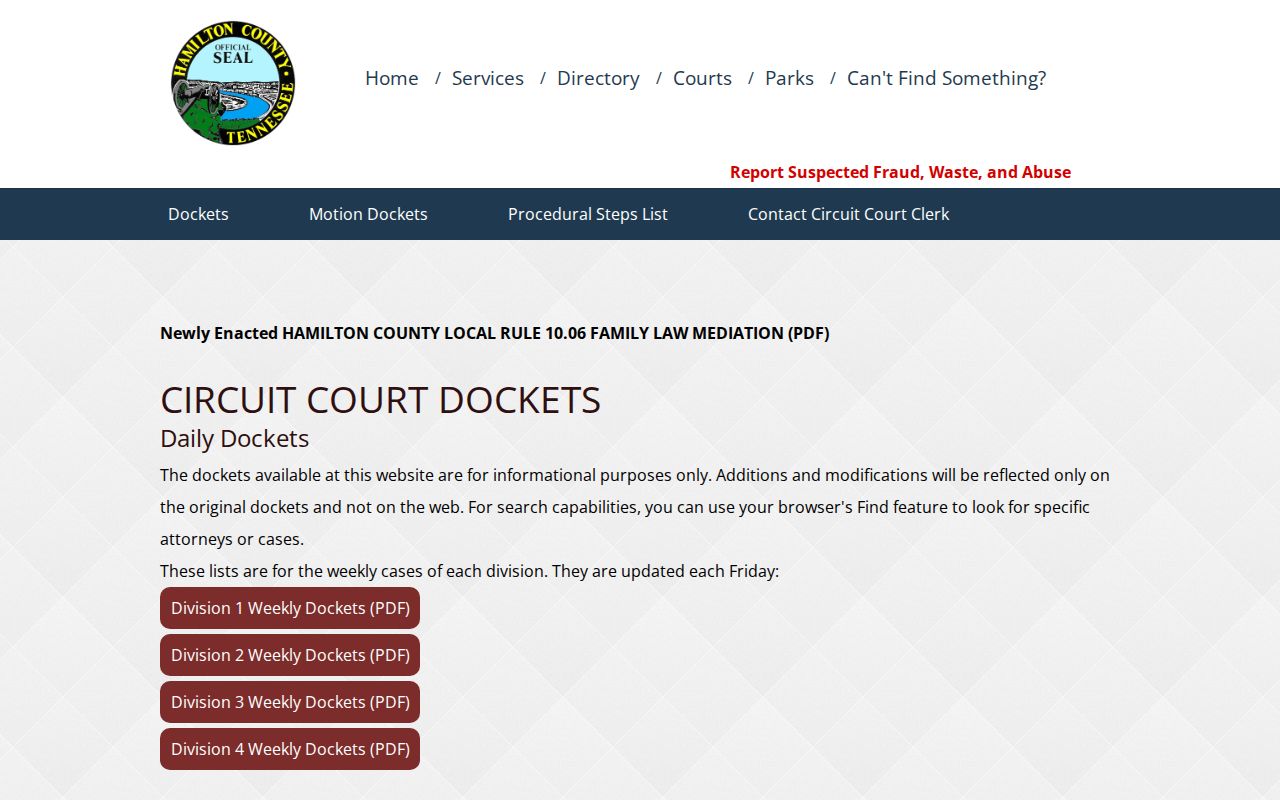
The official Circuit Court docket source displays Hamilton County's division-based civil schedule links.
What Cases Fill the Civil Docket
The right Hamilton County civil docket follows the court's authority. A Sessions Civil filing will never show up on a Chancery motion list just because both are civil. Court papers usually name the clerk and division, so read that caption before searching.
- Sessions Civil limited claims, defaults, ordinary trials, and detainers
- Circuit tort, contract, condemnation, and workers' compensation cases
- Circuit domestic relations, adoption, name-change, and lower-court appeals
- Chancery estate, trust, guardianship, tax, lien, and boundary matters
- Chancery equity, fraud, contract, and administrative-review cases
Some family-related material stays public while protected identifiers or sealed filings do not. Juvenile matters sit with a separate clerk and confidentiality framework. A missing online result never proves that no file exists.
Hamilton Sessions Weekdays Matter
The 2026 Sessions Civil schedule sorts motions, defaults, initial appearances, and ordinary civil trials into calendar blocks. Detainer trials get blocks too. The blocks run across the workweek. Detainers are split further between Chattanooga Housing Authority matters and everything else. So the setting type matters as much as the date.
A docket entry marked motion is a request set for court action, not a ruling. Default and initial appearance are procedural settings too. Locally, a detainer is the calendar term for a possession matter. Before appearing, check the exact block, courtroom, and current docket. The web copy is informational. It may not include later changes.
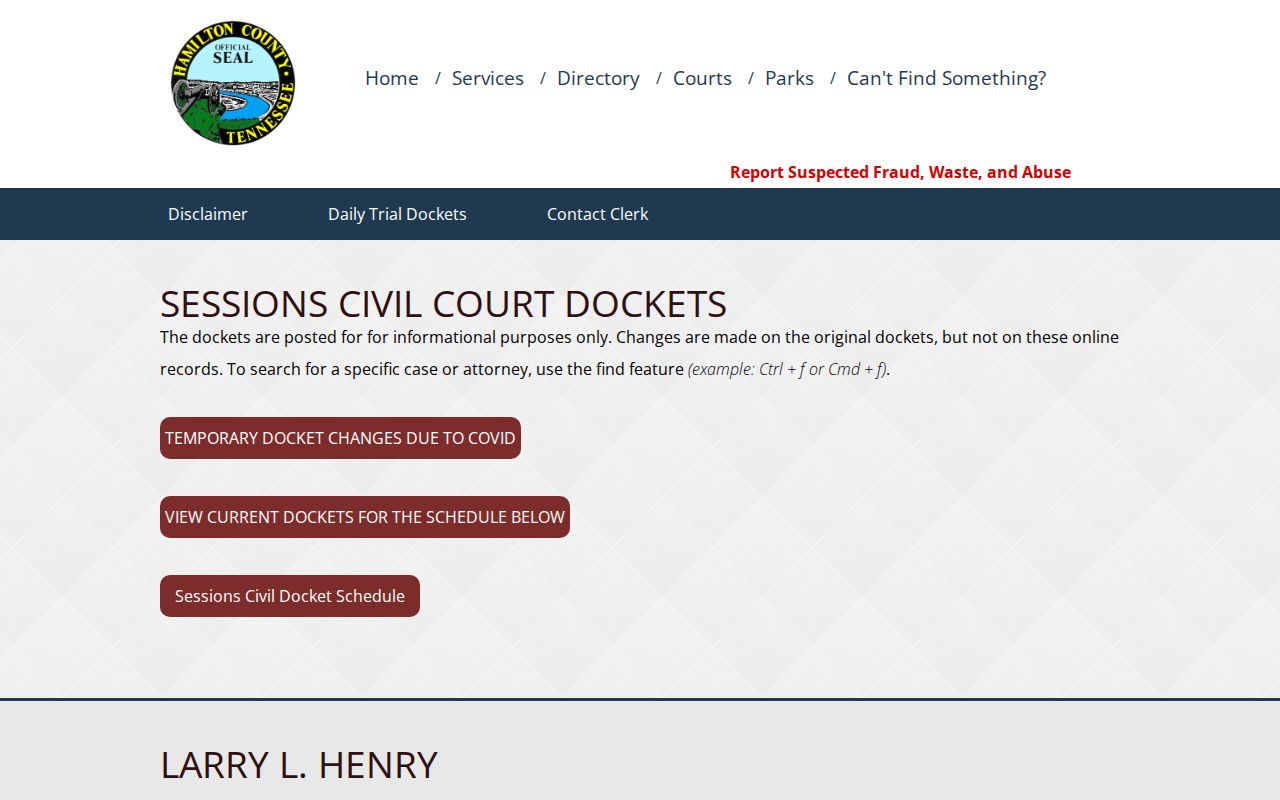
The county's Sessions Civil docket source leads to the local eDockets workflow.
Hearings on Hamilton Civil Dockets
The official docket page says Circuit weekly and motion materials are updated each Friday. Sessions Civil runs on its yearly schedule, while Chancery uses part-specific motion calls. A continuance postpones a setting. The replacement date may surface only in a later clerk entry or order. The full Hamilton County court schedule helps separate weekly lists from case entries. Those case entries actually control.
Confirm any near-term court date with the correct clerk. Circuit and Chancery pages retain some remote-access information, but ordinary motion practice may still be in person. A saved WebEx link is not enough. Rely on the current division page and the signed order before appearing remotely.
Hamilton's 270-Day Check
Circuit Court keeps a Procedural Steps List. It works like an early alarm for stalled civil cases. If a file sits idle for 270 days, the court steps in. It posts the case for a 30-day period. After that window, the matter lands on a dismissal calendar. The date is the third Monday of February, June, or October. Posting is not a ruling. It signals a warning and sets a schedule, nothing more.
Anyone tracking a Hamilton County case should read the list next to the docket itself. A filed motion or other court action can arrive during the notice window. Do the online list and the case history seem to clash? Ask the Circuit Clerk which document controls.
Hamilton Civil Forms and Copies
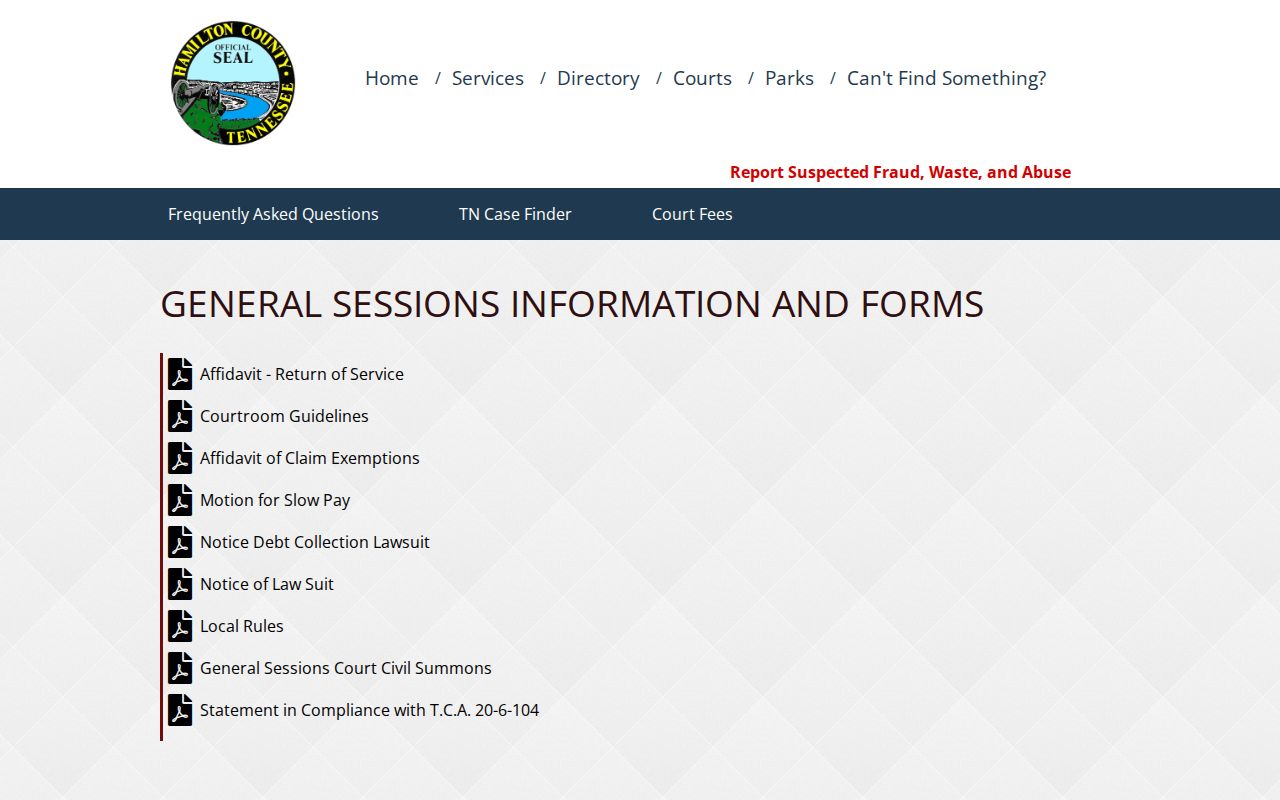
The Sessions Civil forms page gathers the paperwork. A Hamilton County civil case tends to need it. Summons forms, service forms, exemption and slow-pay forms, and debt-collection notices sit there. Local-rule forms and statutory-compliance forms do too. Browsing them helps you name the exact document you want from the clerk. They are not legal advice. They do not replace the clerk's own filing instructions.
Looking is free; copies are not. The county posts separate fee sheets for Circuit and Sessions Civil. Grab the right one. When you write to the clerk, be specific. Say whether you want inspection, a plain copy, a certified copy, or an electronic file. Give the court, the case number, the date range, and the document by name. A tight request cuts the search work, the copying cost, and the wait.
The official Sessions Civil forms source shows the local forms available to civil litigants.
Who Can See Civil Dockets
Most Hamilton County court records sit open to the public. Sealed, confidential, and protected content stays closed. Tennessee Rule 34 sets the baseline for access. The Tennessee Public Records Act adds a records-request framework. Local court rules and orders govern the judicial files themselves. If the clerk withholds something, ask for the cited basis. Also ask whether a redacted copy can be released.
You have several ways in. Try the clerk's counter, a phone call, a mailed request, the official docket pages, or TN Case Finder. A Clerk and Master request can cover inspection, paper or electronic copies, pickup, mail, or electronic delivery. One warning before you share anything from a file. Keep Social Security numbers, full birth dates, driver's-license data, medical details, juvenile identifiers, and private contact data out of public view.
Key rules: Tennessee Rule 34 sets the court-record access baseline. Hamilton County's public-records policy explains the local TPRA request framework. Tennessee Rule 5B permits local electronic filing rules.
The official Tennessee electronic-filing rule shows the authority behind local e-filing procedures.
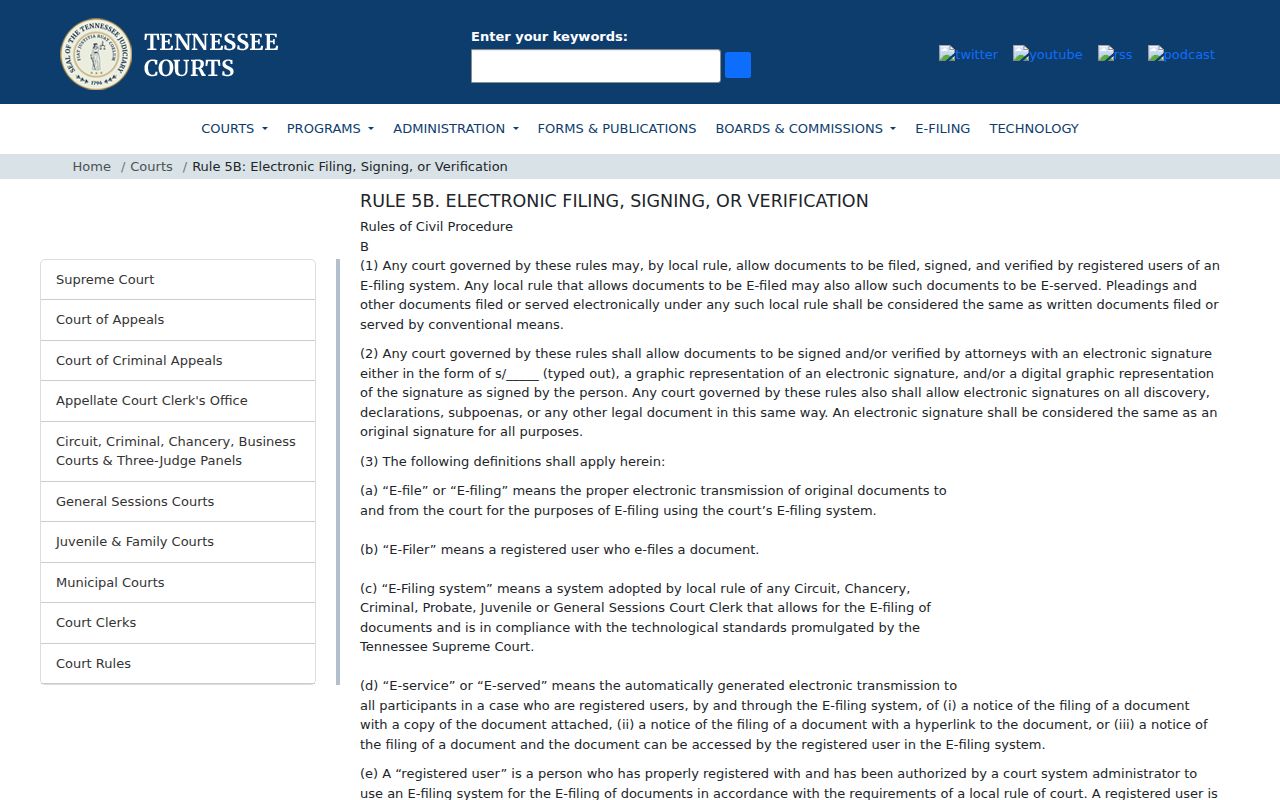
The rule also explains a common frustration: electronic filing does not put every case document online for public view.